Online assessment in higher education during the COVID-19
DOI:
https://doi.org/10.35564/jmbe.2024.0012Keywords:
Assesment, Digital Transformation, COVID-19, Masters, Integrity, digital skills, crisisAbstract
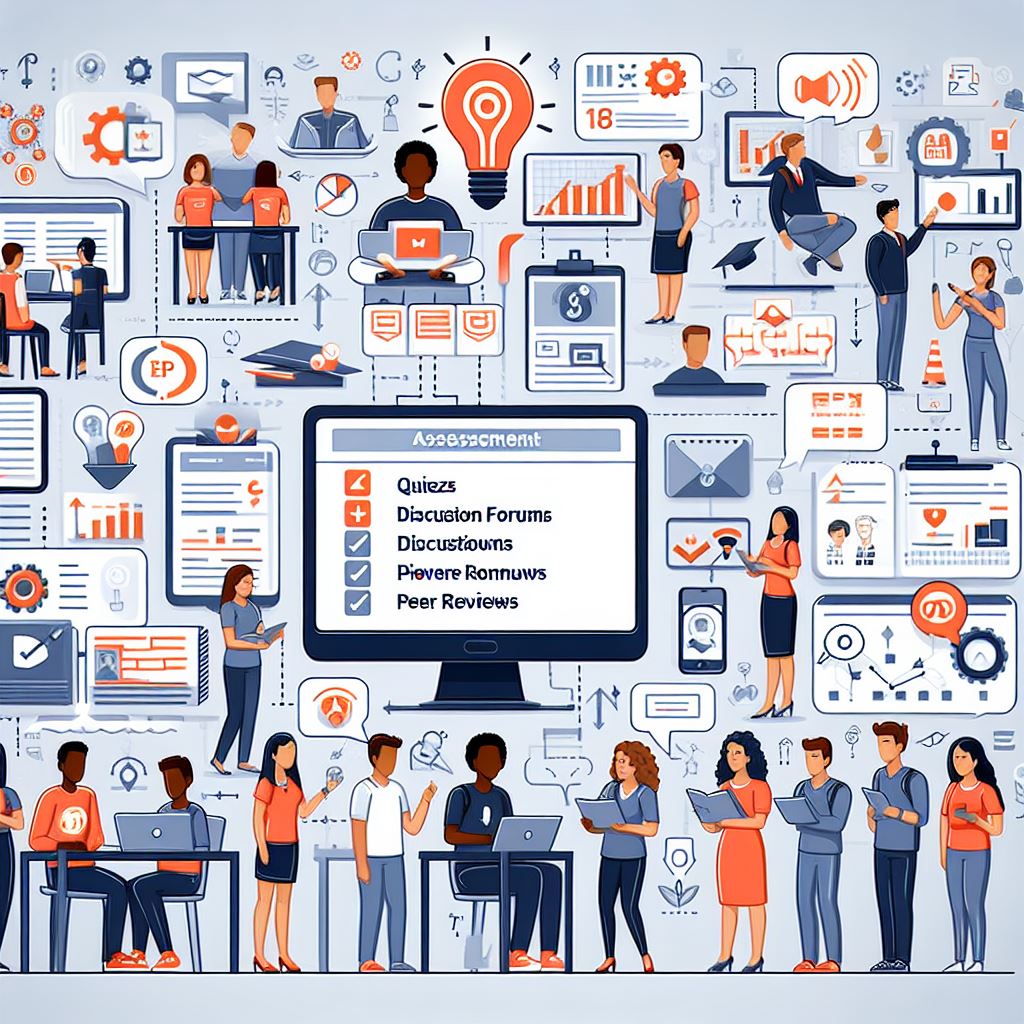
The COVID-19 pandemic has accelerated the digital transformation of education, prompting universities worldwide to swiftly transition to online and blended learning environments. The adaptation process to online education varies depending on several factors, including the level of digitalization and technological penetration in each country, the availability of technologies at universities, and the digital skills of students and staff. Additionally, the specific field of knowledge influences the adaptation process, with differences observed between disciplines such as health sciences and humanities. In this study, we conduct an exploratory qualitative analysis on how universities have responded, specifically focusing on the coordinators of Master’s programs in Spain in the specific area of assessment. This unprecedented situation has forced educators and institutions to rethink their assessment strategies and adapt to a new educational landscape. The insights gained from this study could provide valuable guidance for future crises and contribute to the ongoing discourse on the role of digital technologies in education in general, and in assessment in particular.
References
Adams, W. C. (2015). Conducting semi‐structured interviews, in Kathryn E., Harry P. & Joseph S.. Handbook of practical program evaluation, 492-505. https://doi.org/10.1002/9781119171386.ch19
Afzal, A., Zia, F., & Khan, S. A. (2024). Exploring the Effectiveness of Online Assessment Methods in Higher Education. International Journal of Human and Society, 4(1), 237-253.
Anderson, T., & Dron, J. (2011). Three generations of distance education pedagogy. International Review of Research in Open and Distributed Learning, 12(3), 80-97. https://doi.org/10.19173/irrodl.v12i3.890
Area-Moreira, M., Bethencourt-Aguilar, A., Martín-Gómez, S., & San Nicolás-Santos, M. B. (2021). Análisis de las políticas de enseñanza universitaria en España en tiempos de Covid-19. La presencialidad adaptada. Revista de Educación a Distancia (RED), 21(65), 1-19. https://doi.org/10.6018/red.450461
Bradford, S., & Cullen, F. (2012). Research and Research Methods for Youth Practitioners. Routledge.
https://doi.org/10.4324/9780203802571
Brown, A. P. (2010). Qualitative method and compromise in applied social research. Qualitative research, 10(2), 229-248. https://doi.org/10.1177/1468794109356743
Chandra, Y., & Shang, L. (2019). Inductive Coding BT - Qualitative Research Using R: A Systematic Approach (Y. Chandra & L. Shang (eds.); pp. 91-106). Springer Singapore. https://doi.org/10.1007/978-981-13-3170-1_8
CRUE. (2020). Informe sobre Procedimientos de Evaluación no Presencial. Estudio del Impacto de su Implantación en las Universidades Españolas y Recomendaciones.
Dendir, S., & Maxwell, R. S. (2020). Cheating in online courses: Evidence from online proctoring. Computers in Human Behavior Reports, 2, 100033. 10.1016/j.chbr.2020.100033
Escamilla-Solano, S., Diez-Martin, F., Blanco-González, A., & Fernández de las Peñas, C. (2023). What Have We Learned From COVID-19 in Business and Management and What Are the Future Challenges? American Behavioral Scientist, 0(0). https://doi.org/10.1177/00027642231191752
Elaine Huber, Lynne Harris, Sue Wright, Amanda White, Corina Raduescu, Sandris Zeivots, Andrew Cram & Andrew Brodzeli (2024) Towards a framework for designing and evaluating online assessments in business education, Assessment & Evaluation in Higher Education, 49:1, 102-116. https://10.1080/02602938.2023.2183487
Farnell, T., Skledar Matijević, A., Šćukanec Schmidt, N. (2021). The impact of COVID-19 on higher education: a review of emerging evidence, NESET report, Luxembourg: Publications Office of the European Union. https://doi.org/10.2766/069216
Flick, U. (2009). An Introduction to Qualitative Research (4th edition). Sage.
FLOASS (2024). Proyecto FLOASS Resultados y analíticas de aprendizaje en la educación superior: Un marco de acción desde la evaluación sostenible. Retrieved from https://floass.uca.es/ (accessed 10.03.24)
Garrison, D. R., & Kanuka, H. (2004). Blended learning: Uncovering its transformative potential in higher education. The Internet and Higher Education, 7(2), 95-105. https://doi.org/10.1016/j.iheduc.2004.02.001
Gikandi, J. W., Morrow, D., & Davis, N. E. (2011). Online formative assessment in higher education: A review of the literature. Computers & Education, 57(4), 2333-2351. https://10.1016/j.compedu.2011.06.004
González M., Marco, E., & Medina, T. (2020). Informe de iniciativas y herramientas de evaluación online universitaria en el contexto del Covid-19. In Ministerio de Universidades. https://www.ciencia.gob.es/(accessed 30.08.2022)
Grande de Prado, M., García Peñalvo, F. J., Corell Almuzara, A., & Abella García, V. (2021). Evaluación en Educación Superior durante la pandemia de la COVID-19. Campus Virtuales : Revista Científica Iberoamericana de Tecnología Educativa, 10, 49-58.
https://doi.org/10.14201/eks.23086
Ibarra-Sáiz, M.S., González-Elorza, A., y Rodríguez-Gómez, G. (2023). Aportaciones metodológicas para el uso de la entrevista semiestructurada en la investigación educativa a partir de un estudio de caso múltiple. Revista de Investigación Educativa, 41(2),501-522. https://doi.org/10.6018/rie.546401
MAXQDA. (2022). MAXQDA | All-In-One Tool for Qualitative Data Analysis & Mixed Methods - MAXQDA. https://www.maxqda.com/(accessed 30.08.2022)
Osabutey, E.L.C., Senyo, P.K. and Bempong, B.F. (2024), "Evaluating the potential impact of online assessment on students' academic performance", Information Technology & People, Vol. 37 No. 1, pp. 152-170. https://doi.org/10.1108/ITP-05-2021-0377
Parameswaran, U. D., Ozawa-Kirk, J. L., & Latendresse, G. (2020). To live (code) or to not: A new method for coding in qualitative research. Qualitative Social Work, 19(4), 630-644. https://doi.org/10.1177/1473325019840394
Popham, W. J. (2018). Classroom assessment: What teachers need to know (8th ed.). Pearson.
Rafiq, D. S., Afzal, D. A., & Kamran, F. (2022). Impact of School Environment on Students' Academic Achievements at the University Level. VFAST Transactions on Education and Social Sciences, 10(4), 19-30. https://doi.org/10.21015/vtess.v10i4.1216
Universidad Complutense de Madrid. (n.d.). Funciones de los coordinadores de los másteres. Recuperado de https://www.ucm.es/muip-ccinf/funciones-de-los-coordinadores-de-los-masteres (accessed 17.03.2022)
UNESCO. (2022). Education: From disruption to recovery. https://en.unesco.org/covid19/educationresponse (accessed 30.08.2022)
Downloads
Published
Issue
Section
License
Copyright (c) 2024 Journal of Management and Business Education

This work is licensed under a Creative Commons Attribution-NonCommercial-ShareAlike 4.0 International License.
License terms at: https://creativecommons.org/licenses/by-nc/4.0/legalcode