¿La utilidad percibida de la rúbrica aumenta la confianza del orador? Un estudio en asignaturas de organización de empresas
DOI:
https://doi.org/10.35564/jmbe.2025.0015Palabras clave:
autoevaluación, confianza, comunicación verbal, universidad, rúbricaResumen
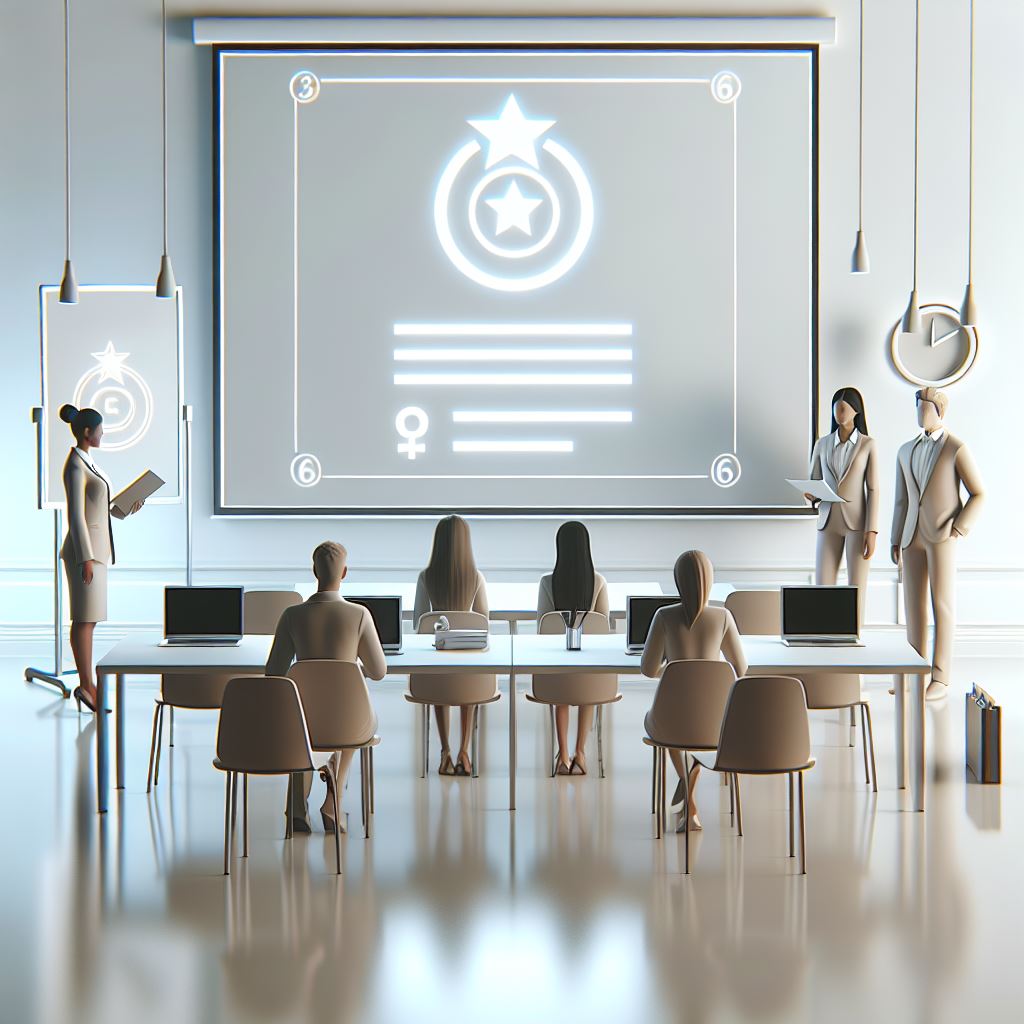
En un contexto académico real, tomando como referencia el aula, esta investigación analiza la utilidad que los estudiantes de dos titulaciones universitarias otorgan a una rúbrica para preparar presentaciones orales. Asimismo, evalúa el efecto que la utilidad de la rúbrica tiene sobre la relación entre la confianza como orador y la autoevaluación de la competencia en presentaciones orales. Esta investigación se realizó con una muestra de 202 estudiantes universitarios de asignaturas de Organización de Empresas de dos titulaciones universitarias: Relaciones Laborales y Gestión de Recursos Humanos e Ingeniería Civil. En ambos casos, los alumnos debían realizar una exposición oral sobre un tema seleccionado por el profesor. Un mes antes de la presentación en el aula, se pidió a los estudiantes que cumplimentaran un cuestionario y se les proporcionó una rúbrica. Por último, tras la presentación oral, cada alumno calificó su actuación global. Para analizar los datos, se aplicó el análisis de componentes con rotación varimax, el análisis de correlación y el análisis de regresión jerárquica. Los resultados muestran que cuanto mayor es la utilidad percibida de la rúbrica, mayor es la influencia de la confianza como orador en la autoevaluación de la realización de presentaciones orales. La rúbrica es útil para orientar la preparación de la presentación oral, aunque parece que la percepción de utilidad es mayor en las alumnas que en los alumnos. Desde una perspectiva teórica, los hallazgos indican que, cuando los estudiantes perciben la rúbrica como una herramienta de orientación creíble y fiable, se observa una mayor correspondencia entre sus habilidades percibidas y las calificaciones que se otorgan a sí mismos. Desde el punto de vista práctico, ofrecer oportunidades de discusión entre estudiantes y profesores sobre los estándares de la rúbrica puede mejorar las habilidades de comunicación oral.
Referencias
Andrade, H. (2019). A Critical Review of Research on Student Self-Assessment. Frontiers in Education, 4(August), 1–13. https://doi.org/10.3389/feduc.2019.00087
Andrews, C. D., Richardson, M. J., & Whiting, E. F. (2025). Teachers’ definitions, beliefs, and reasons for using or not using student self-assessment. Teacher Development, 29(1), 70–90. https://doi.org/10.1080/13664530.2024.2373160
Aryadoust, V. (2015). Self- and Peer Assessments of Oral Presentations by First-Year University Students. Educational Assessment, 20(3), 199–225. https://doi.org/10.1080/10627197.2015.1061989
Bolívar-Cruz, A., & Verano-Tacoronte, D. (2018). Self-assessment of the oral presentation competence: Effects of gender and student’s performance. Studies in Educational Evaluation, 59, 94-101. https://doi.org/10.1016/j.stueduc.2018.04.001
Boud, D., & Falchikov, N. (1989). Quantitative studies of student self assessment in higher education: a critical analysis of findings. Higher Education, 18(5), 529–549.
Cardon, P., Fleischmann, C., Logemann, M., Heidewald, J., Aritz, J., & Swartz, S. (2024). Competencies Needed by Business Professionals in the AI Age: Character and Communication Lead the Way. Business and Professional Communication Quarterly, 87(2): 223-246. https://doi:10.1177/23294906231208166
De Grez, L., Valcke, M., & Roozen, I. (2009). The impact of an innovative instructional intervention on the acquisition of oral presentation skills in higher education. Computers & Education, 53(1), 112–120. https://doi.org/10.1016/j.compedu.2009.01.005
De Grez, L., Valcke, M., & Roozen, I. (2012). How effective are self- and peer assessment of oral presentation skills compared with teachers’ assessments? Active Learning in Higher Education, 13(2), 129–142. https://doi.org/10.1177/1469787412441284
De Paola, M., Lombardo, R., Pupo, V., & Scoppa, V. (2021). Do women shy away from public speaking? A Field Experiment. Labour Economics, 70:102001. https://doi.org/10.1016/j.labeco.2021.102001
Falchikov, N. (2005). Improving Assessment through Student Involvement: Practical Solutions for Aiding Learning in Higher and Further Education. Routledge Falmer.
Gaffney, A. L. H., & Kercsmar, S. E. (2016). Students’ affective learning in a technologically mediated writing and speaking course: A situated learning perspective. Journal of Business and Technical Communication, 30(3), 322–351. https://doi.org/10.1177/1050651916636371
Galván-Sánchez, I., Verano-Tacoronte, D., González-Betancor, S. M., Fernández-Monroy, M., & Bolívar-Cruz, A. (2017). Assessing oral presentation skills in Electrical Engineering: Developing a valid and reliable rubric. International Journal of Electrical Engineering Education, 54(1), 17-34. https://doi.org/10.1177/0020720916659501
Gelman, A., & Hill, J. (2006). Data Analysis Using Regression and Multilevel/Hierarchical Models. In Data Analysis Using Regression and Multilevel/Hierarchical Models. Cambridge University Press. https://doi.org/10.1017/CBO9780511790942
González-Betancor, S. M., Bolívar-Cruz, A., & Verano-Tacoronte, D. (2019). Self-assessment accuracy in higher education: The influence of gender and performance of university students. Active Learning in Higher Education, 20(2), 101-114. https://doi.org/10.1177/1469787417735604
Grieve, R., Woodley, J., Hunt, S. E., & McKay, A. (2021). Student fears of oral presentations and public speaking in higher education: a qualitative survey. Journal of Further and Higher Education, 45(9), 1281–1293. https://doi.org/10.1080/0309877X.2021.1948509
Jonsson, A. (2014). Rubrics as a way of providing transparency in assessment. Assessment and Evaluation in Higher Education, 39(7), 840–852. https://doi.org/10.1080/02602938.2013.875117
Jonsson, A., Panadero, E., Pinedo, L., & Fernández-Castilla, B. (2025). Using rubrics for formative purposes: identifying factors that may affect the success of rubric implementations. Assessment in Education: Principles, Policy & Practice, 1–20. https://doi.org/10.1080/0969594X.2025.2486947
Karaman, P. (2024). Effects of using rubrics in self-assessment with instructor feedback on pre-service teachers’ academic performance, self-regulated learning and perceptions of self-assessment. European Journal of Psychology of Education, 0(0). https://doi.org/10.1007/s10212-024-00867-w
Klenowski, V. (1995). Student Self-evaluation Processes in Student-centred Teaching and Learning Contexts of Australia and England. Assessment in Education: Principles, Policy & Practice, 2(2), 145–163. https://doi.org/10.1080/0969594950020203
Köppe, C., Verhoeff, R. P., & van Joolingen, W. (2024). Elements for understanding and fostering self-assessment of learning artifacts in higher education. Frontiers in Education, 9. https://doi.org/10.3389/feduc.2024.1213108
Krebs, R., Rothstein, B., & Roelle, J. (2022). Rubrics enhance accuracy and reduce cognitive load in self-assessment. Metacognition and Learning, 17(2), 627–650. https://doi.org/10.1007/s11409-022-09302-1
León, S. P., Panadero, E., and García-Martínez, I. (2023). How Accurate Are Our Students? A Meta-analytic Systematic Review on Self-assessment Scoring Accuracy. Educational Psychology Review, 35(4): 106. https://doi.org/10.1007/s10648-023-09819-0
Méndez, F. X., Inglés, C. J., & Hidalgo, M. D. (2004). La versión española abreviada del «cuestionario de confianza para hablar en público» (Personal Report of Confidence as Speaker): Fiabilidad y validez en población adolescente. Psicologia Conductual, 12(1), 25–42.
Miller, T. M., & Geraci, L. (2011). Training metacognition in the classroom: the influence of incentives and feedback on exam predictions. Metacognition and Learning, 6(3), 303–314. https://doi.org/10.1007/s11409-011-9083-7
Nadolski, R. J., Hummel, H. G. K., Rusman, E., & Ackermans, K. (2021). Rubric formats for the formative assessment of oral presentation skills acquisition in secondary education. Educational Technology Research and Development, 69(5), 2663–2682. https://doi.org/10.1007/s11423-021-10030-7
Nash, G., Crimmins, G., & Oprescu, F. (2016). If first-year students are afraid of public speaking assessments what can teachers do to alleviate such anxiety? Assessment and Evaluation in Higher Education, 41(4), 586–600. https://doi.org/10.1080/02602938.2015.1032212
Nieminen, J. H. (2022). Disrupting the power relations of grading in higher education through summative self-assessment. Teaching in Higher Education, 27(7), 892–907. https://doi.org/10.1080/13562517.2020.1753687
Nieminen, J. H., & Boud, D. (2025). Placing authenticity at the heart of student self-assessment: an integrative review. Teaching in Higher Education, 30(3), 640–662. https://doi.org/10.1080/13562517.2024.2367669
Nieminen, J. H., & Tuohilampi, L. (2020). ‘Finally studying for myself’ – examining student agency in summative and formative self-assessment models. Assessment & Evaluation in Higher Education, 45(7), 1031–1045. https://doi.org/10.1080/02602938.2020.1720595
Panadero, E., & Jonsson, A. (2013). The use of scoring rubrics for formative assessment purposes revisited: A review. Educational Research Review, 9, 129–144. https://doi.org/10.1016/j.edurev.2013.01.002
Panadero, E., & Jonsson, A. (2020). A critical review of the arguments against the use of rubrics. Educational Research Review, 30(August 2019), 100329. https://doi.org/10.1016/j.edurev.2020.100329
Panadero, E., Jonsson, A., & Botella, J. (2017). Effects of self-assessment on self-regulated learning and self-efficacy: Four meta-analyses. Educational Research Review, 22, 74–98. https://doi.org/10.1016/j.edurev.2017.08.004
Panadero, E., & Romero, M. (2014). To rubric or not to rubric? The effects of self-assessment on self-regulation, performance and self-efficacy. Assessment in Education: Principles, Policy and Practice, 21(2), 133–148. https://doi.org/10.1080/0969594X.2013.877872
Pekrun, R., Elliot, A. J., & Maier, M. A. (2009). Achievement goals and achievement emotions: Testing a model of their joint relations with academic performance. Journal of Educational Psychology, 101(1), 115–135. https://doi.org/10.1037/a0013383
Quinn, S., & Goody, A. (2019). An Evaluation of a Course Aimed at Reducing Public Speaking Anxiety among University Students. International Journal of Teaching and Learning in Higher Education, 31(3).
Ritchie, S. M. (2016). Self-assessment of video-recorded presentations: Does it improve skills? Active Learning in Higher Education, 17(3), 207–221. https://doi.org/10.1177/1469787416654807
Scoles, J., Huxham, M., & McArthur, J. (2014). Mixed-Methods Research in Education: Exploring Students’ Response to a Focused Feedback Initiative (Issue January). https://doi.org/10.4135/978144627305013514690
Smith, A., Schieber, D., & Austin, T. (2022). Describing Confidence: Student-Identified Signals of Presenter Confidence. International Journal of Teaching and Learning in Higher Education 2022, 33(3), 319–327. http://www.isetl.org/ijtlhe/
Smith, C. M., & Sodano, T. M. (2011). Integrating lecture capture as a teaching strategy to improve student presentation skills through self-assessment. Active Learning in Higher Education, 12(3), 151–162. https://doi.org/10.1177/1469787411415082
Taras, M. (2016). Situating power potentials and dynamics of learners and tutors within self-assessment models. Journal of Further and Higher Education, 40(6), 846–863. https://doi.org/10.1080/0309877X.2014.1000283
Tsang, A. (2018). Positive effects of a programme on oral presentation skills: high- and low-proficient learners’ self-evaluations and perspectives. Assessment and Evaluation in Higher Education, 43(5), 760–771. https://doi.org/10.1080/02602938.2017.1407917
Tsang, A. (2020). The relationship between tertiary-level students’ self-perceived presentation delivery and public speaking anxiety: A mixed-methods study. Assessment & Evaluation in Higher Education, 45(7), 1060–1072. ttps://doi.org/10.1080/02602938.2020.1718601
Van Ginkel, S., Gulikers, J., Biemans, H., & Mulder, M. (2017). The impact of the feedback source on developing oral presentation competence. Studies in Higher Education, 42(9), 1671–1685. https://doi.org/10.1080/03075079.2015.1117064
Van Ginkel, S., Gulikers, J., Biemans, H., & Mulder, M. (2015). Towards a set of design principles for developing oral presentation competence: A synthesis of research in higher education. Educational Research Review, 14, 62–80. https://doi.org/10.1016/j.edurev.2015.02.002
Violanti, M. T., & Kelly, S. (2023). Self-Assessments: Creating validated teaching and training tools. Business and Professional Communication Quarterly. https://doi.org/10.1177/23294906231203369
Yan, Z., & Carless, D. (2022). Self-assessment is about more than self: the enabling role of feedback literacy. Assessment & Evaluation in Higher Education, 47(7), 1116–28. https://doi.org/10.1080/02602938.2021.2001431
Descargas
Publicado
Número
Sección
Licencia
Derechos de autor 2025 Journal of Management and Business Education

Esta obra está bajo una licencia internacional Creative Commons Atribución-NoComercial-CompartirIgual 4.0.
License terms at: https://creativecommons.org/licenses/by-nc/4.0/legalcode